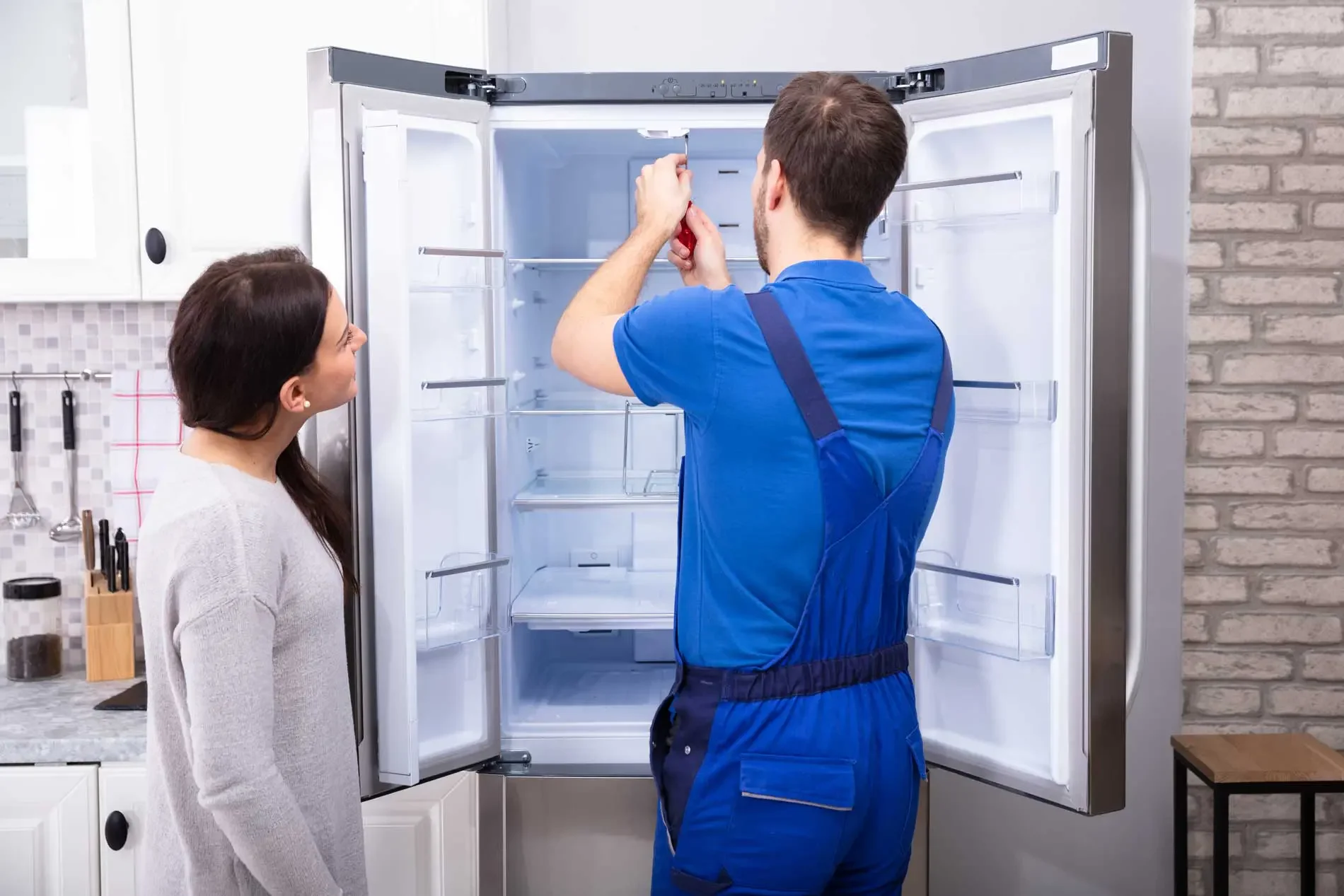
When a refrigerator ice maker stops working, it usually doesn’t fail all at once. In most real service calls, homeowners notice gradual changes first - slower ice production, smaller cubes, or irregular freezing - before the system stops completely.
At SmartFix Appliances, we regularly diagnose ice maker issues in Charlotte homes. While symptoms may look similar, the root cause often differs depending on the refrigerator model, age, and operating conditions.
Why ice makers stop working
In most cases, the issue doesn’t start in the ice maker itself. It usually begins in the water supply system or freezing cycle and only later affects ice production.
One of the most common problems we see is a partially restricted or frozen water line. At first, this doesn’t stop the system completely - it only reduces water flow.
Homeowners typically notice:
- smaller or uneven ice cubes
- slower ice production cycles
- occasional gaps in ice formation
As the restriction worsens, the line can freeze completely, stopping production entirely.
Another frequent issue is a failing water inlet valve. This component controls water flow into the ice maker. When it begins to degrade, symptoms can be misleading - the refrigerator may still dispense water, but not enough reaches the ice tray.
We also see ice maker assemblies wear out over time, especially in older refrigerators. In these cases, internal motors or ejector mechanisms fail, and the system stops responding.
Temperature and sensor-related issues
A stable freezer temperature is critical for consistent ice production.
Ice makers operate within a narrow range, and even small fluctuations can disrupt the cycle. Before complete failure, users often notice:
- soft or partially frozen ice
- irregular cube shapes
- inconsistent production cycles
Sensor or thermostat failures can create similar symptoms. The system may incorrectly detect that the ice bin is full or that conditions are not ready for a new cycle, stopping production even when everything appears normal.
How we diagnose ice maker issues
In real service calls, ice maker problems rarely come from a single cause. We inspect the system step by step:
- water flow and pressure
- water inlet valve condition
- ice maker module operation
- sensor and thermostat behavior
One of the most common mistakes we see is replacing the ice maker too early. In many cases, the actual issue is elsewhere in the system, such as restricted water flow or unstable freezer temperature.
Different brands also tend to fail in different ways:
- Samsung & LG → sensor or control issues
- Whirlpool & GE → valve and mechanical wear
- Frigidaire → flow and freezing issues
When repair makes sense
In most situations, repairing the ice maker is the most practical option, especially when the refrigerator is cooling normally and the issue is limited to ice production.
Replacement is usually only recommended when:
- multiple components fail at the same time
- the ice maker is heavily worn out
- replacement parts are discontinued or unreliable
Proper diagnosis is important not just for cost, but to ensure the real cause is fixed - not just the symptom.
Professional ice maker repair in Charlotte
SmartFix Appliances provides ice maker repair services across Charlotte and surrounding areas. Our focus is accurate diagnosis rather than unnecessary part replacement.
We service all major brands, including Samsung, LG, Whirlpool, GE, and Frigidaire, and handle both simple and complex ice production issues.
If your ice maker stopped working
If your refrigerator has stopped producing ice, the system is often still partially functional - which is a good sign. It usually means the issue is repairable without major component replacement.
The key is identifying the problem early, before restricted water flow or sensor errors begin affecting other parts of the system.