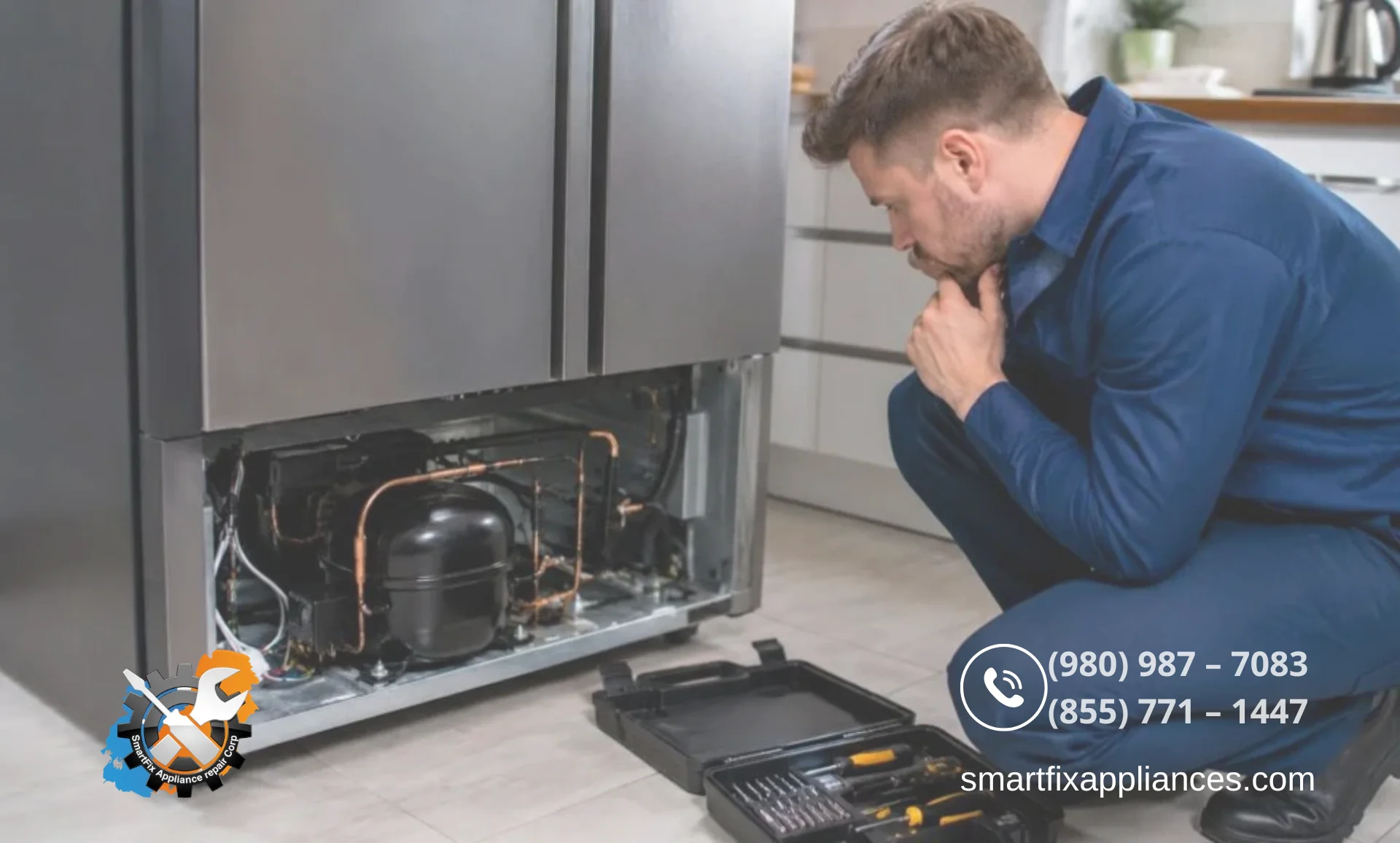
Your refrigerator compressor is often called the “heart” of the appliance - and for good reason. It keeps refrigerant moving through the cooling system, helping your fridge maintain safe temperatures and keep food fresh every day. When the compressor starts struggling, the entire refrigerator can lose its ability to cool properly, often without an obvious warning at first.
Most homeowners first notice subtle changes: food spoiling faster than usual, unusual noises from the back of the unit, or the refrigerator running longer than normal. Over time, these small issues can develop into more serious refrigerator compressor problems that affect both the fridge and freezer compartments. If ignored, the situation may lead to higher energy bills, expensive repairs, or even full appliance failure.
Understanding how to tell if a refrigerator compressor is bad can help you act early - before the problem escalates. In this guide, we’ll break down the most common warning signs, what causes compressor issues, and when it’s time to call a professional appliance repair technician.
What Does a Refrigerator Compressor Do?
The compressor is the core of your refrigerator’s cooling system. Its job is to compress refrigerant and circulate it through a sealed system of coils, allowing heat to be removed from inside the appliance.
In simple terms, the process works like this: the compressor pushes refrigerant through the system, where it absorbs heat from inside the fridge and releases it outside. This continuous cycle is what keeps both the refrigerator and freezer at stable, safe temperatures.
Because of this central role, even small issues can quickly affect performance. When the compressor is not working properly, you may notice warm spots in the fridge, partial cooling in the freezer, or inconsistent temperatures throughout the appliance. These are often early signs of refrigerator compressor failure that homeowners tend to overlook.
According to the U.S. Department of Energy, maintaining proper refrigerator performance is essential not only for food safety but also for energy efficiency, since cooling systems account for a significant portion of household electricity use.
How to Tell If Refrigerator Compressor Is Bad
Many homeowners notice cooling issues first, but several hidden symptoms may indicate a faulty refrigerator compressor before the appliance stops working completely.
The challenge is that these symptoms often appear gradually. At first, the fridge still works - just not as efficiently. That’s why early detection is so important if you want to avoid serious refrigerator compressor problems.
Refrigerator Is Not Cooling Properly
One of the most common warning signs is a noticeable drop in cooling performance. Food may not stay fresh as long, drinks feel less cold, and dairy products spoil faster even when settings remain unchanged.
In some cases, the freezer may still partially work while the fridge compartment becomes warm. This uneven cooling happens when refrigerant circulation becomes inefficient. If you’re trying to figure out how to tell if refrigerator compressor is bad, inconsistent temperatures are often one of the earliest indicators.
Compressor Is Constantly Running
A healthy refrigerator cycles on and off throughout the day. If it runs almost nonstop, the compressor may be struggling to maintain temperature.
This continuous operation usually means the system is working harder than it should. A worn or faulty refrigerator compressor loses efficiency over time, leading to higher energy consumption and increased wear on internal components.
Clicking, Buzzing, or Loud Humming Sounds
Unusual noises are another common early warning sign. Clicking sounds may indicate that the start relay is trying - and failing - to engage the compressor. Buzzing or loud humming can signal internal strain or electrical issues.
Because several refrigerator compressor problems can create similar symptoms, accurate diagnosis is important. A technician can determine whether the issue is electrical or mechanical in nature.
Compressor Overheats
Some warmth is normal, but excessive heat is not. If the back of your refrigerator feels unusually hot or you notice a burning smell, the compressor may be overheating.
Overheating often signals that the system is under stress and struggling to circulate refrigerant properly. Left unchecked, this can lead to full refrigerator compressor failure.
Frequent Cycling On and Off
Short cycling - when the refrigerator turns on and off too frequently - is another subtle but important sign.
This behavior increases wear on the compressor and reduces energy efficiency. Over time, it may lead to unstable temperatures and more serious cooling issues.
What Happens When a Fridge Compressor Fails?
When a compressor begins to fail, the cooling cycle becomes unstable. Refrigerant can no longer circulate properly, and the refrigerator gradually loses its ability to remove heat.
This is when what happens when a fridge compressor fails becomes very noticeable: both the fridge and freezer start warming up, and food begins to spoil much faster than expected.
In many cases, refrigerator compressor failure starts with reduced efficiency. The compressor works harder, runs longer, and consumes more energy - but still cannot maintain proper cooling. Eventually, it may stop functioning completely.
As the system deteriorates, other components such as the start relay, thermostat, and condenser fan may also become affected. That’s why early detection is so important - it helps prevent a chain reaction of failures and unnecessary repair costs.
Common Causes of Refrigerator Compressor Failure
Refrigerator compressors are designed to last many years, but several common issues can shorten their lifespan.
Dirty Condenser Coils
Dust and debris on condenser coils restrict airflow and force the compressor to work harder. Over time, this extra strain can lead to overheating and reduced efficiency.
Power Surges
Electrical surges from storms or unstable power supply can damage sensitive compressor components or the start relay. In some cases, failure may happen immediately; in others, damage develops gradually.
Lack of Maintenance
Poor airflow, blocked vents, or worn door seals can all contribute to overheating and long-term stress on the system. Regular maintenance helps reduce these risks significantly.
Age and Wear
Most compressors last 10-15 years. As they age, efficiency drops and internal wear becomes more common, especially in heavily used appliances.
Refrigerant Issues
Leaks or low refrigerant levels force the compressor to overwork. Since refrigerant systems are sealed, repairs should always be handled by certified professionals.
Refrigerator Compressor Not Working: DIY Checks Before Calling a Technician
If your refrigerator suddenly stops cooling, it doesn’t always mean the compressor has failed. Start with simple checks before assuming the worst.
Make sure the appliance is plugged in and the circuit breaker hasn’t tripped. Check temperature settings, as accidental adjustments are more common than most people realize. Listen for compressor sounds - a quiet hum is normal, but repeated clicking or silence may indicate trouble.
Cleaning condenser coils can also improve performance if dust buildup is affecting airflow. You can also try resetting the refrigerator by unplugging it for a few minutes.
However, it’s important to understand limitations. Anything involving refrigerant or sealed-system components must be handled by EPA-certified professionals. According to EPA Section 608 regulations, refrigerant work requires certification due to safety and environmental risks.
Refrigerator Compressor Repair vs Replacement
When the compressor fails, homeowners often face a key decision: repair or replace.
Repair makes sense if the refrigerator is relatively new or if the issue is caused by a small electrical component rather than the compressor itself. In these cases, refrigerator compressor repair can be cost-effective and extend appliance life.
Replacement is usually better for older units or when repair costs become too high. Compressor replacement typically ranges from $300 to $800+, depending on brand, labor, and parts.
If your refrigerator is over 10-15 years old or has repeated cooling issues, replacement may be the smarter long-term option.
When to Call a Professional Appliance Repair Technician
Compressor issues are complex and require professional tools and expertise. Certified technicians can accurately diagnose whether the issue is truly the compressor or another component like the relay or thermostat.
They also handle refrigerant safely and perform electrical testing that homeowners should never attempt. Continuing to run a failing refrigerator can sometimes make the problem worse, increasing both repair costs and energy usage.
At SmartFix Appliances, we provide professional diagnosis and refrigerator compressor repair services designed to restore performance and prevent unnecessary appliance replacement.
Compressor issues rarely happen overnight. They usually develop through small warning signs - reduced cooling, unusual noises, overheating, or inconsistent operation.
Knowing how to tell if refrigerator compressor is bad can help you act early, avoid food loss, and reduce repair costs. In many cases, timely refrigerator compressor repair can restore normal performance and extend the life of your appliance.
The key takeaway is simple: don’t ignore early symptoms. Compressor problems almost never fix themselves, and early inspection is always the most cost-effective approach.
Frequently asked questions
Common signs include poor cooling, constant running, unusual noises, and warm spots inside the fridge. These often point to early refrigerator compressor problems before a full breakdown happens.
The earliest signs are usually subtle: food spoiling faster, temperature fluctuations, and the fridge running longer than normal. Clicking or buzzing sounds can also appear early.
Yes, but only temporarily. It may run without properly cooling. Over time, a faulty compressor leads to rising temperatures and eventual shutdown.
Cooling stops because refrigerant can no longer circulate. Both the fridge and freezer warm up, and food spoils quickly. This is a typical stage of refrigerator compressor failure.
It depends on the age and condition of the appliance. Newer units are often worth repairing, while older refrigerators may be more cost-effective to replace.
Most refrigerator compressor replacement jobs cost between $300 and $800+, depending on brand, labor, and parts required.
Yes. Dirty condenser coils force the compressor to work harder, which can lead to overheating and long-term damage.
Start with basic checks like power supply, thermostat settings, and coil cleaning. If the issue continues, contact a qualified appliance technician for diagnosis.