
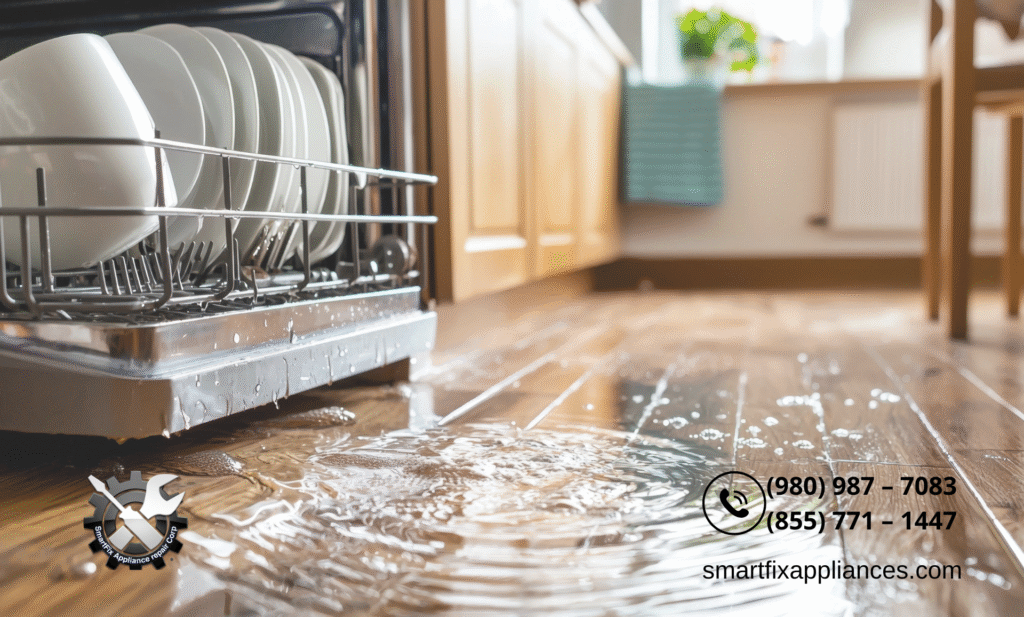
A leaking dishwasher might seem minor at first, but even a small drip can quickly escalate into costly problems. In Charlotte and across the U.S., dishwasher flooding and hidden leaks are common sources of household damage, often warping floors, damaging cabinets, and leading to expensive repairs. Persistent moisture also creates the perfect environment for dishwasher mold, posing both structural risks and potential health hazards for your family.
Nationally, water damage from appliances contributes to roughly $14 billion in annual household losses (Insurance Information Institute). Many of these problems begin with a small leak that could have been caught early.
This guide helps Charlotte homeowners – and readers nationwide – understand the risks of dishwasher leaks, recognize early warning signs, and explore effective dishwasher leak repair strategies. We’ll also cover kitchen appliance repair tips, preventative maintenance, and expert advice to minimize appliance water damage. With timely care, you can avoid dishwasher flooding, control mold growth, and keep your kitchen running efficiently.
Common Causes of Dishwasher Water Leaks
Most leaks stem from issues that are easy to prevent with regular care. Recognizing these causes allows homeowners to act quickly and avoid costly dishwasher water leak damage.
Broken Seals, Gaskets, or Float Switches
Over time, rubber door seals or gaskets may wear out, crack, or misalign, causing slow leaks. A faulty float switch regulating water levels can overfill the appliance, leading to dishwasher flooding. Early dishwasher leak repair prevents extensive damage.
Clogged or Damaged Drain Hoses
Debris buildup or cracks in drain hoses can back up water during cycles, sometimes causing sudden dishwasher water leaks that damage floors and cabinetry.
Improper Installation or Leveling
A dishwasher that isn’t level or installed correctly can allow water to pool incorrectly. Professional kitchen appliance repair may be required to correct alignment and prevent ongoing leaks.
Overfilled Dishwasher
Overloading or using improper detergent can cause overflows. Repeated overfills increase the risk of mold and long-term water damage.
| Cause | Average Repair Cost (US) | Notes |
| Broken door seal/gasket | $50–$150 | Frequent cause of leaks |
| Drain hose replacement | $75–$200 | Often causes dishwasher flooding |
| Float switch / sensor repair | $100–$250 | Regulates water level |
| Installation issues | $120–$300 | Labor-intensive, needs pro service |
By identifying the cause early and scheduling timely dishwasher leak repair, Charlotte homeowners can prevent extensive water damage and keep kitchens safe, functional, and mold-free.
How Dishwasher Leaks Lead to Water Damage
Dishwasher leaks vary from subtle drips to sudden overflows, and both can cause serious damage. Understanding how water spreads helps homeowners act before minor issues escalate.
Gradual vs. Sudden Leaks
- Gradual leaks often go unnoticed, seeping into cabinets, flooring, and subfloors over time.
- Sudden leaks from a cracked hose or failed float switch can result in immediate dishwasher flooding.
Risks to Flooring, Cabinets, and Subfloors
Water can warp laminate, hardwood, or grout, and trapped moisture encourages dishwasher mold. Even small leaks, if ignored, lead to costly appliance water damage.
Mold Growth Risks from Dishwasher Leaks
Even small leaks create the ideal environment for dishwasher mold, which thrives in damp, warm conditions with organic debris.
Conditions for Mold Growth
- Persistent moisture from leaks
- Warm kitchen temperatures
- Food residue and organic particles
Timeline
Mold can begin forming within 24-48 hours after a leak. Without prompt repair, it spreads to cabinets, flooring, and surrounding air, posing a health risk.
Health Risks
Exposure may trigger allergies, respiratory irritation, and complications for sensitive individuals like children, elderly adults, and people with asthma.
Addressing leaks promptly with dishwasher leak repair reduces appliance water damage and health risks. Regular dishwasher maintenance tips – cleaning gaskets, checking hoses, and ensuring proper drainage – help prevent leaks from developing.
Signs You Have a Dishwasher Leak
Catching leaks early prevents expensive kitchen appliance repair costs:
- Standing Water or Puddles – Immediate sign of a failed seal, hose, or float system.
- Musty Odors – Early indicator of dishwasher mold.
- Staining or Warping on Floors/Cabinets – Signs of prolonged leaks.
- Dishwasher Error Codes – Alerts for float, sensor, or drainage issues.
Pro Tip: Early dishwasher leak repair keeps costs predictable and prevents minor leaks from escalating into full dishwasher flooding events.
Preventing Dishwasher Water Damage & Mold
Proactive maintenance reduces both costs and health risks. Effective dishwasher maintenance tips include:
- Clean seals and gaskets monthly to maintain a watertight seal.
- Inspect hoses and connections for cracks or loose fittings.
- Keep filters and drains clear to prevent backups and flooding.
- Level the appliance properly to avoid spills.
- Install water alarms under or near the dishwasher to catch leaks early.
Following these steps helps Charlotte homeowners avoid costly dishwasher flooding and appliance water damage.
Dishwasher Repair Costs & When to Call a Professional
Average dishwasher leak repair costs range from $150-$300, while replacing a dishwasher can cost $500-$1,200.
50% Rule: If repair costs are less than 50% of replacement, fixing the leak is usually smarter.
- Example: Repairing a $200 leak vs replacing a $900 dishwasher saves $700.
Calling a certified technician ensures safe, reliable repairs and prevents dishwasher flooding, dishwasher mold, and long-term kitchen appliance repair costs.
Early detection prevents dishwasher mold, flooding, and costly appliance water damage. Routine dishwasher maintenance tips and timely professional service reduce kitchen appliance repair costs.
Charlotte homeowners should contact licensed technicians like SmartFix Appliance Repair for fast, reliable dishwasher leak repair. Acting quickly protects your home, extends appliance lifespan, and prevents small leaks from becoming major problems.
Frequently Asked Questions
What are the most common causes of a dishwasher water leak?
Leaks often result from worn door seals, gaskets, clogged or damaged drain hoses, malfunctioning float switches, or improper installation. Early dishwasher leak repair can prevent flooding and mold.
How quickly can dishwasher mold develop?
Dishwasher mold can start growing within 24-48 hours in warm, damp areas with leftover food debris. Prompt leak repair helps avoid health risks and appliance water damage.
What are the signs my dishwasher is leaking?
Look for standing water under the unit, musty odors, warped flooring or cabinets, and error codes on your dishwasher. Detecting a dishwasher water leak early reduces repair costs.
How much does a dishwasher leak repair cost?
On average, dishwasher leak repair ranges from $150-$300, depending on the issue. Replacing the appliance can cost $500-$1,200. Using the 50% rule can help decide whether to repair or replace.
Can I prevent dishwasher flooding and mold at home?
Yes. Follow simple dishwasher maintenance tips: clean seals, check hoses, clear filters, level the appliance, and use water alarms to detect leaks early.
When should I call a professional for dishwasher repairs?
If leaks, flooding, or mold are present, or if DIY repairs seem risky, contact a licensed technician. Certified experts prevent appliance water damage and reduce long-term kitchen appliance repair costs.
Can a small leak cause serious water damage?
Absolutely. Even minor drips can seep into cabinets, floors, and subfloors, leading to dishwasher flooding, mold growth, and costly repairs if left unaddressed.